
How Much Do Professional Organizers Charge? Rates, Packages and Add-Ons

If you are hiring a professional organizer, the first question is cost. If you are one, the question is what to charge, and what to add so a job pays more than your hours. This guide covers both.
Typical rates
Most professional organizers in the US bill by the hour, and a common range is about $50 to $150 an hour. Where an organizer lands in that range depends on:
- Location. Big-city organizers charge more, and so do organizers in wealthy suburbs.
- Specialty. Move managers, senior move specialists and organizers trained in chronic disorganization usually charge more than general home organizers.
- Team size. A team of two or three costs more per hour, but finishes a garage in a day instead of three.
- Experience and credentials. Certification and a strong portfolio support higher rates.
Most organizers have a minimum session, typically three or four hours, because travel and setup make short visits uneconomical.
Pricing by the project
More organizers now sell flat-price packages for defined spaces:
| Space | What a package usually covers |
|---|---|
| Pantry | Sort, toss expired food, decant, label |
| Closet | Edit, sort by category, hang and fold, label bins |
| Garage | Sort, donate run, shelving plan, bin and label system |
| Whole home | A series of sessions, room by room |
| Move | Pack, unpack and set up the new home |
Packages make the price easy to say yes to, and they reward an organizer who works fast. Hourly billing is still more common for whole-home projects and moves, where scope is hard to predict.
What else shows up on the invoice
- Products. Bins, drawer dividers, labels and shelving. Charged at cost plus a shopping fee, or marked up.
- Shopping time. Some organizers bill the hours spent buying products.
- Donation and disposal. Hauling to a donation center or a junk removal fee.
- Travel. Outside a set radius.
Add-ons that raise the value of a job
For organizers, the best add-on is one that keeps the system working after you leave. A client who cannot find anything three months later does not refer you.
Maintenance visits. A quarterly two-hour refresh keeps the space and the relationship going.
Unpacking after a move. Clients will pay more for a kitchen that is set up on day one.
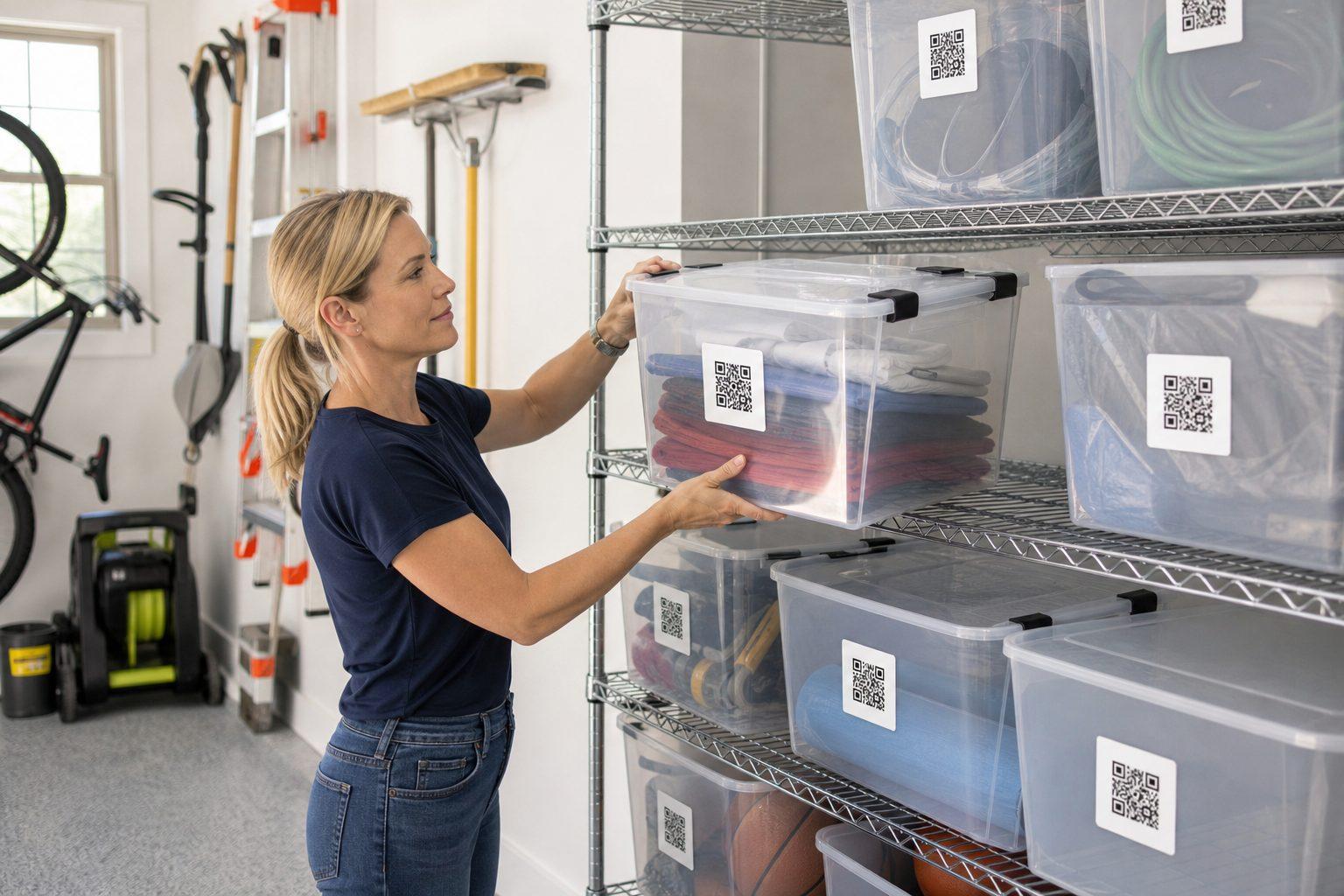
A digital inventory setup. Put a QR label on every bin you organized, take one photo of what went in, and hand the client a home they can search from their phone. With an app like SnapFind, a garage or storage closet takes 30 to 60 minutes. Many organizers sell this as a line item ("Digital inventory setup") and include the labels in the price.
SnapFind's program for professional organizers is built around that add-on: Client Kits with labels and a Pro gift for the client, plus a revenue share when clients keep paying for the app after their gift ends. It is a small, recurring income stream from work you already did.
How to choose an organizer
- Ask for before-and-after photos of a job like yours.
- Ask what is included: products, donation runs, labels.
- Ask how they help you keep it organized after they leave.
- Check reviews, and ask if they belong to a professional association.
Frequently asked questions
How much does a professional organizer cost per hour?
Many professional organizers in the US charge roughly $50 to $150 an hour, with rates toward the top end in large cities and for specialists such as move managers and hoarding-trained organizers. Most have a minimum session of three or four hours.
Is it cheaper to pay by the project?
Often, for well-defined spaces. A flat price for a pantry, closet or garage lets you budget up front, and the organizer carries the risk if it takes longer. Whole-home and move projects are usually still billed by the hour or by the day.
Do organizers charge for products like bins and labels?
Usually yes, either at cost plus a shopping fee or as a markup on products they bring. Some include a product allowance in a package price.
What extra services do organizers sell?
Common add-ons are product shopping, donation drop-off, maintenance visits, unpacking after a move, and digital setups such as a home inventory with QR labels and photos, so the client can search their home after the organizer leaves.
Should I tip a professional organizer?
Tipping is not expected for a business owner, but it is appreciated, especially for long or difficult jobs. A review and a referral are worth more to most organizers than a tip.
Are you an organizer? See Client Kits and the partner program.